

Lactate Strips + Lancet Set | VivaChek Official
Lactate Strips + Lancet Set | VivaChek Official
Couldn't load pickup availability
Professional Lactate Test Strips + Safety Lancets
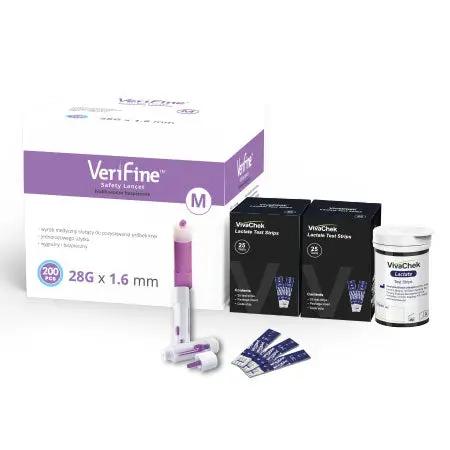
The VivaChek Lactate Strips + Lancet Set provides everything you need for accurate blood lactate testing – premium test strips and sterile safety lancets in one convenient package. Perfect for athletes who already own a VivaChek lactate analyzer.
📦 What's Included in Your Set
- ✓ VivaChek Lactate Test Strips (50/75/100/200 pack depending on variant)
- ✓ Safety Lancets (Sterile, single-use, matching quantity)
- ✓ Alcohol Prep Pads (For cleaning testing site)
- ✓ Protective Strip Vial (Keeps strips fresh and dry)
- ✓ Quick Reference Guide (Testing instructions & tips)
Note: This set includes test strips and lancets only. Lactate analyzer/meter sold separately.
💰 Why Choose This Strips + Lancet Set?
Value Bundle
Save compared to buying strips and lancets separately
Certified Accuracy
YSI2900-based calibration ensures ±0.3 mmol/L precision
Room Temperature Storage
No refrigeration needed – convenient for travel and competitions
Free EU Shipping
Fast, free delivery across all European Union countries
🏃 Perfect For
- Endurance Athletes: Runners, cyclists, triathletes with existing VivaChek meters
- Rowers & Swimmers: Water sports athletes tracking lactate threshold
- Coaches & Trainers: Monitor multiple athletes with bulk strip packs
- Sports Scientists: Field testing and performance assessment
- Fitness Enthusiasts: Regular lactate monitoring for data-driven training
- Teams & Clubs: Bulk packs for group testing sessions
🔬 How Lactate Testing Works
-
Insert a test strip
Place a fresh test strip into your VivaChek meter's strip port. The device will auto-calibrate.
-
Prepare your finger
Clean with alcohol swab (included), use lancet for quick finger prick.
-
Apply blood sample
Touch a small drop of blood (0.7 μL) to the strip edge. The strip draws in the sample automatically.
-
Get instant results
Read your lactate level in 15 seconds on the LCD display (mmol/L).
Tip: Test strips store at room temperature (4°C – 30°C) – no refrigeration needed! Keep vial tightly closed.
⚙️ Technical Specifications
| Measurement Range | 0.5 – 25.0 mmol/L |
| Sample Size | 0.7 μL (microliters) |
| Test Time | 15 seconds |
| Accuracy | ±0.3 mmol/L (compared to laboratory analyzers) |
| Strip Shelf Life | 18 months from manufacture date |
| After Opening | 6 months or until expiry date |
| Storage Temperature | 4°C – 30°C (room temperature) |
| Lancet Gauge | 28G (ultra-fine, minimal discomfort) |
| Compatibility | VivaChek Lactate Analyzer only |
| Certifications | YSI2900 Calibrated |
📦 Storage & Shelf Life
Unopened Vials
18 months from manufacture date (check expiry on packaging)
After Opening
6 months or until expiry date – whichever comes first
Storage Temperature
4°C – 30°C (room temperature, no refrigeration)
Storage Tips
Keep vial tightly closed, avoid humidity and direct sunlight

❓ Frequently Asked Questions
How accurate is this meter compared to lab testing?
VivaChek lactate meters use electrochemistry-based cutting-edge technology with accuracy within ±0.3 mmol/L compared to laboratory YSI analyzers. This level of precision is more than sufficient for training and performance monitoring purposes.
What's the difference between Complete Lactate Testing kit and buying separately?
This bundle saves you €30+ compared to purchasing each item individually. Plus, you get everything in one shipment, ready to use immediately. Perfect for athletes just starting with lactate testing.
Can I test myself or do I need help?
You can absolutely test yourself! Most athletes master self-testing within 2-3 sessions. The meter requires only a tiny blood sample (0.7 μL) from the fingertip, similar to glucose testing.
How long do test strips last after opening?
Test strips remain accurate for 6 months after opening the vial, or until the expiration date printed on the packaging – whichever comes first. Always check the expiry date before testing.